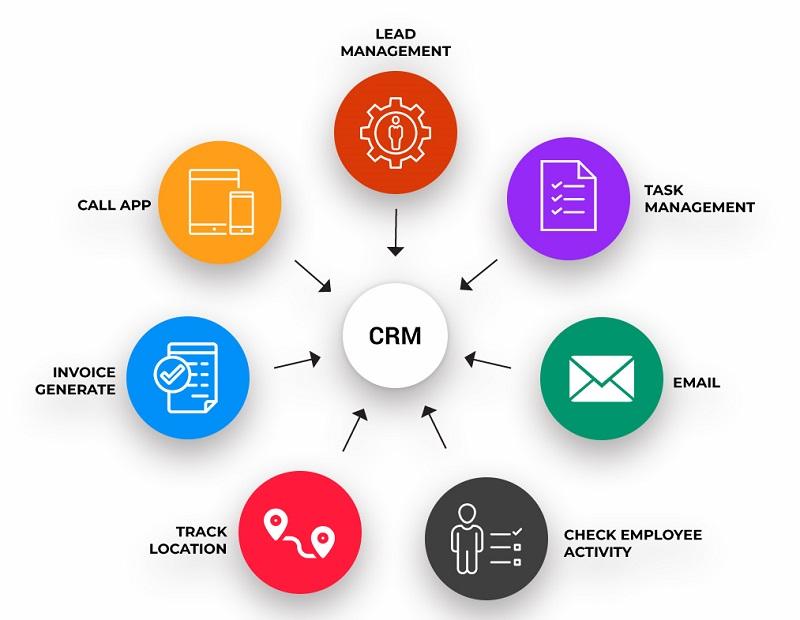
In today’s competitive landscape, CRM Software is becoming a core engine for customer engagement and revenue predictability. Companies are moving beyond simple contact databases into unified customer experience systems that connect sales, marketing, service, and success teams. This shift enables a 360-degree customer view, reducing friction across the lifecycle from lead capture to renewals. Modern CRM deployments increasingly emphasize data quality, identity resolution, and actionable segmentation. As organizations adopt hybrid work models, CRM tools also serve as collaboration hubs that capture interactions, standardize handoffs, and preserve institutional knowledge. Cloud-first delivery and subscription pricing have made enterprise-grade functionality more accessible, accelerating adoption among small and mid-sized businesses. At the same time, buyers expect faster time-to-value, intuitive user experiences, and deep integrations with email, calendars, and productivity suites across different operating environments.
Vendors are responding by embedding automation and intelligence into everyday workflows. AI-assisted lead scoring, conversation insights, and next-best action recommendations are rapidly becoming table stakes. Teams benefit from automated data entry, activity capture, and pipeline hygiene, which improves forecasting accuracy and sales coaching. Customer service functions are also evolving with CRM-based ticketing, omnichannel routing, and knowledge management that reduces resolution time. Marketing teams rely on CRM segmentation to personalize journeys and measure attribution more reliably. Importantly, CRM platforms are integrating with customer data platforms and analytics stacks to create more consistent reporting across departments. As these capabilities mature, organizations can make faster decisions with fewer manual processes. The result is a measurable improvement in productivity, customer satisfaction, and account expansion opportunities across both B2B and B2C environments today.
Security, compliance, and governance are becoming decisive selection criteria for CRM buyers. With more customer interactions captured digitally, organizations must protect sensitive data while enabling legitimate access for distributed teams. Role-based permissions, audit trails, and encryption are expected, especially in regulated industries like finance, healthcare, and government. Many enterprises also require regional data residency and support for evolving privacy obligations. Alongside this, CRM administrators are focusing on configuration flexibility, low-code tooling, and scalable integration options to reduce reliance on heavy custom development. These factors influence total cost of ownership over time. A well-governed CRM implementation avoids duplicate records, inconsistent fields, and fragmented reporting. In turn, it supports cleaner analytics and better customer experiences. Procurement teams increasingly scrutinize vendor roadmaps, uptime commitments, and ecosystem maturity before making long-term platform commitments.
Looking ahead, CRM will continue converging with automation, analytics, and experience management. The most effective systems will orchestrate processes across channels, guiding teams through consistent playbooks while learning from outcomes. Integration with communication tools, e-signature, billing, and customer success software will further standardize customer operations. Organizations that treat CRM as a strategic system of record—rather than a standalone tool—will be better positioned to scale. Successful deployments typically combine executive sponsorship, clear data standards, and continuous enablement for end users. Measuring adoption, field usage, and pipeline discipline helps maintain momentum after go-live. As competition increases and customer expectations rise, CRM investments will be judged by their ability to reduce churn, accelerate deals, and improve service quality. This makes CRM a foundational layer for modern growth strategies and long-term customer loyalty.
Top Trending Reports:
Point Of Sale Automation System Market